.png)
Common questions about virtual cardiac rehab, answered — no special tech or equipment needed, one-on-one and group support, and how to get a referral.

A recovery webinar with a Movn care manager: the first 48 hours after a heart attack, warning signs, medications, emotional health, and long-term lifestyle changes.

Lower your risk of another heart attack by managing the risk factors you can change — blood pressure, cholesterol, diet, exercise, stress, and smoking.

What heart failure is, how the heart pumps, what ejection fraction means, the two main types, and the symptoms and treatments that help you live a fuller life.

Understand coronary artery disease (CAD) and how plaque buildup can lead to a heart attack — plus the warning signs, symptoms, and when to call 911.
Eating well with COPD can make breathing easier — which fats, carbs, and proteins fuel your energy, why to limit sodium, and tips to ease shortness of breath.

Shop smart for your heart: choose fresh produce, lean proteins, whole grains, and low-sodium options, and learn to read labels for heart-healthy groceries.
Learn to recognize your signs of stress — physical, emotional, and behavioral — how stress affects your heart, and how to identify what's triggering it.
How oxygen therapy helps with COPD — easing shortness of breath and improving sleep and activity — plus how to get started and use supplemental oxygen safely.
Técnicas de respiración para la falta de aire: la respiración abdominal y con los labios fruncidos para ralentizar la respiración y respirar mejor.

¿Con qué intensidad debe hacer ejercicio tras un evento cardíaco? Use la escala RPE y la prueba del habla para mantenerse en una zona segura y efectiva.

Cómo progresar de forma segura en su plan de ejercicios tras la rehabilitación cardíaca: ajuste la frecuencia, el tiempo y la intensidad para seguir mejorando.
Pautas de ejercicio para la enfermedad arterial periférica (EAP): frecuencia, intensidad, la escala de claudicación y cómo progresar de forma segura.
A 15-minute follow-along walking workout for PAD — warm-up stretches and walking intervals to improve blood flow and manage claudication, resting as you need to.
Why tracking your exercise matters: stay motivated, see your improvements, and help your care manager tailor your plan using the Movn app and a smartwatch.
A seated upper-body stretch routine for your back, chest, and shoulders — gentle range-of-motion moves and 15-second holds to relieve tension and improve flexibility.
Gentle seated stretches to ease PAD claudication (leg muscle cramping): hamstring, calf, hip, and ankle stretches to boost blood flow between bouts of exercise.
A low-intensity, follow-along range-of-motion session you can do seated or standing — gentle stretches for the neck, shoulders, back, wrists, legs, and ankles.
A full seated strength session with resistance bands — warm-up, bicep curls, calf presses, chest presses, rows, and core work, all at a gentle, follow-along pace.
A gentle, seated lower-body stretch routine for your hips, legs, and ankles — guided range-of-motion and flexibility moves to ease tension and improve mobility.
Exercise safely with COPD: monitor your breathing with the dyspnea scale, watch your oxygen and intensity, and learn the warning signs that mean it's time to rest.
A beginner's guide to using resistance bands safely: how to hold the band, adjust the resistance, and follow good form and safety tips for strength training.

Learn to engage your core correctly to protect your back, improve posture, and lower injury risk — a simple breathing-and-bracing technique you can do seated.
Keep getting stronger after rehab: how to safely progress your exercise plan by adjusting frequency, time, and intensity for both cardio and strength training.
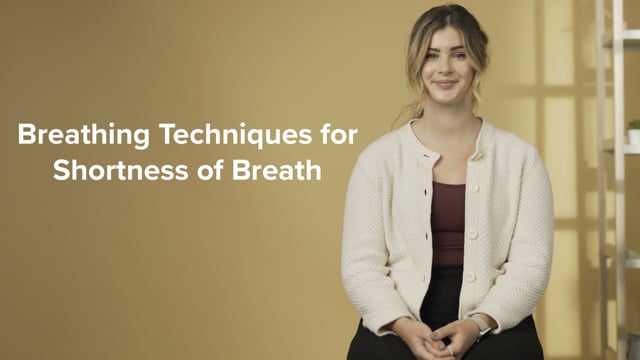
Two breathing techniques for shortness of breath — belly breathing and pursed-lip breathing — to slow your breathing, open your lungs, and feel calmer.